What happens in a session
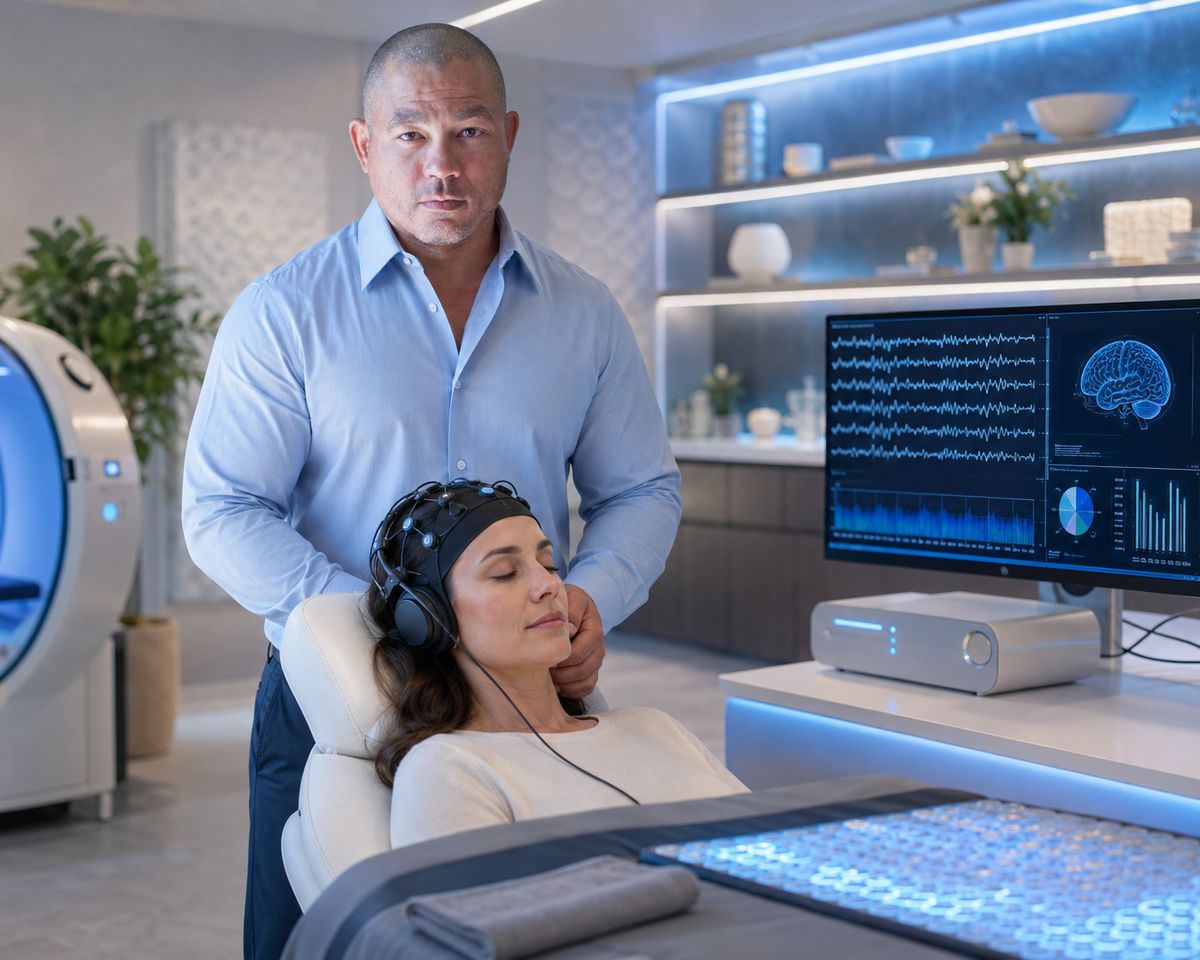
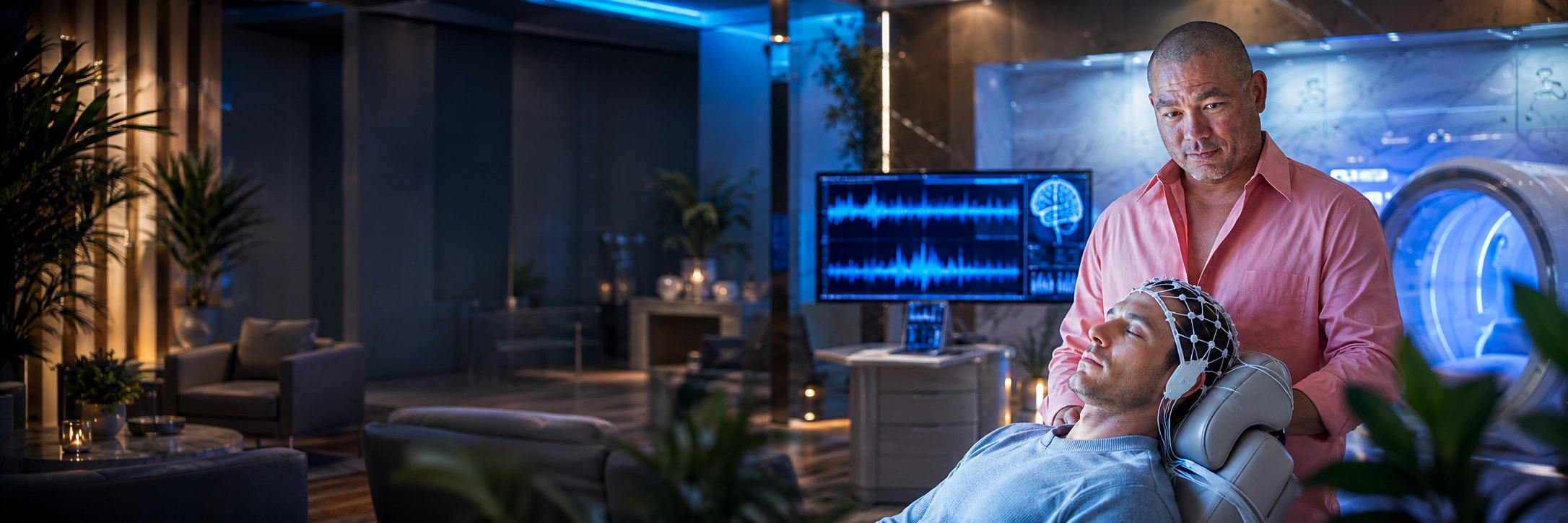
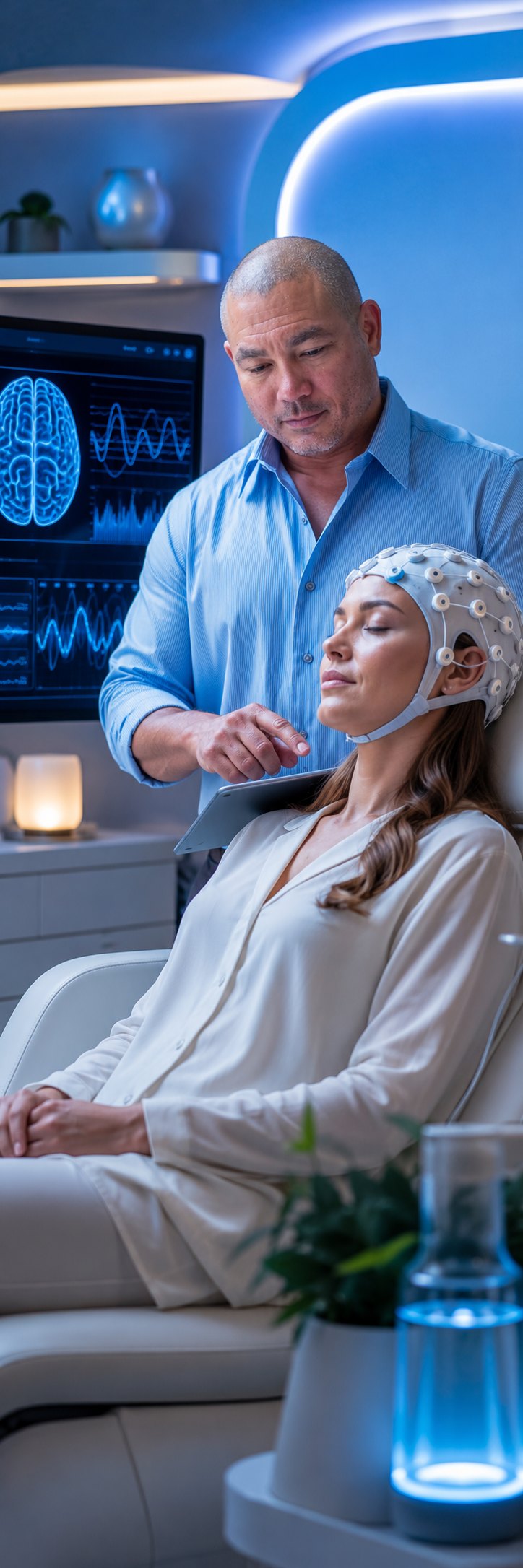
A cap or individual sensors go on with conductive gel - it washes out. You sit in a chair facing a screen for roughly thirty minutes. When your activity moves toward the target the film plays brightly or the game progresses; when it moves away, it dims or pauses. That is the whole mechanism. There is no current, no stimulation, and nothing to do except watch.
The qEEG baseline
Before any training we record a quantitative EEG - a structured recording, eyes open and eyes closed, that produces a map of activity across the scalp. It is what training targets are chosen from, and it is the thing a later recording gets compared against. Without it, “progress” is just an impression.
Course length and honesty about it
Neurofeedback is a training modality, not a single procedure, and courses are typically scheduled in blocks rather than one session at a time. We will tell you the block length before you commit and re-record on a set date. We will not quote you a number of sessions until we have seen your baseline.
What it does not do
Neurofeedback is not a diagnostic test and a qEEG is not a clinical EEG - it does not screen for seizure activity or structural problems, and it is not read by a neurologist. If something in your history points that direction, the right next step is a referral, and we will say so rather than book you a course.
Practical notes
Come with clean, dry hair and no product in it. Sessions are comfortable and there is no recovery time. The most common complaint afterwards is gel in the hair, which is why we keep a shower on site.